- Valley Glaciar: Is form in the hight mountain valleys,where it is cold because of the elevation.
- Continental Glaciars: Is form near the poles,where it is cold because of the latitude.
- Narrower Glaciars: They dragged soil along. As they marged into one glacier, the soil became trapped in the middle, like a stream of soil.
In this blog i will put all the vocabularys i do in my science class. I hope you enjoy it.
sábado, 13 de noviembre de 2010
Lift, Carry and Drop
Gravity affect materials by breaking down rocks in sedementary.that is call mass wasting . They are tree types of glaciars
miércoles, 27 de octubre de 2010
Building Up an Breaking Down
This topic talk about how mountains are form. Lets bigin with the types of mountains, there are two types the fold mountain and the fault block mountain. The fold mountain is a mountain maded of mostly of rock layers folded by being squeezed together.And the fault blog mountain is a mountain made by huge tilted blocks of rocks separated 0from soraunding rock by fault.
The different between weathering and erosion is that weathering is the breking down of pices of rocks and erosion is the proses that picking up of the rock pieces.The horizons are three name: Horizon A: has a lot of humus, Horizon B: have alittle amount of himes an Horizon C: is the bed rock
domingo, 26 de septiembre de 2010
Vocabulary#14: Volcanoes
hot spot: a very hot part of the mantle, where magma can melt throught a plate moving above it.
vent: a central opening in the volcanic area throught wich magma may scape.
lava: magma that reaches Earth surface and flows out of a vent.
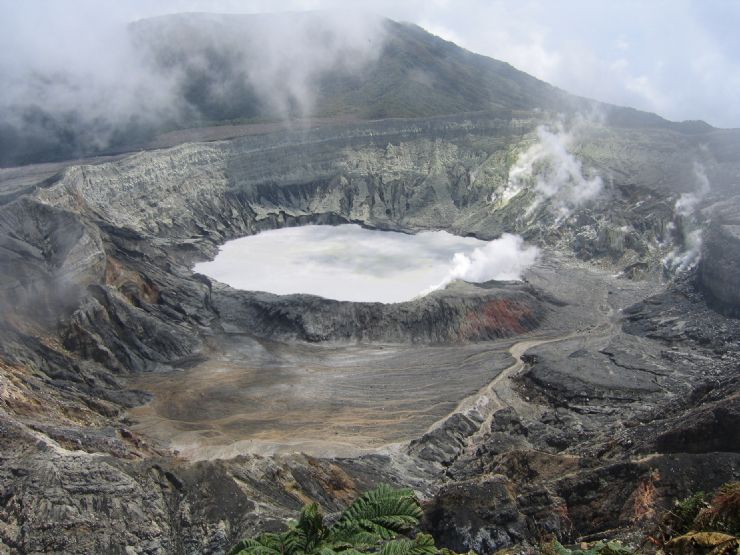
crater: a cuplike hollow that forms at the top of a volcano around the vent.
geothermal energy: heat from below Earth surface.
cinder cone volcano: a steep sided cone that forms from explosive eruptions of hot rocks, ranging from particles to boulders.
shield volcano: a wide, gently sloped cone that forms from flows of lava.
composite volcano: a cone formed from explosed eruption of hot rocks followed by a flow of lava, over and over.
vent: a central opening in the volcanic area throught wich magma may scape.
lava: magma that reaches Earth surface and flows out of a vent.
crater: a cuplike hollow that forms at the top of a volcano around the vent.
geothermal energy: heat from below Earth surface.
cinder cone volcano: a steep sided cone that forms from explosive eruptions of hot rocks, ranging from particles to boulders.
shield volcano: a wide, gently sloped cone that forms from flows of lava.
composite volcano: a cone formed from explosed eruption of hot rocks followed by a flow of lava, over and over.
Vocabulary#13: Earthquakes
fault: a huge crack in the crust, at or below the surface, the sides of which may show evidence of motion.
focus: the point where an earthquake starts, where rocks begin to slide past each other.
seismic waves: a vibriation that spreads out away from a focus when am earthquake happens.
epicenter: the point on Earth surface directly above the focus.
aftershock: the shaking of the crust after the initial shaking of an earthquake.
seismograph: a sensitive divice that detect the shaking of the crust.
magnitude: the amount of energy released by an earthquake.
focus: the point where an earthquake starts, where rocks begin to slide past each other.
seismic waves: a vibriation that spreads out away from a focus when am earthquake happens.
epicenter: the point on Earth surface directly above the focus.
aftershock: the shaking of the crust after the initial shaking of an earthquake.
seismograph: a sensitive divice that detect the shaking of the crust.
magnitude: the amount of energy released by an earthquake.
sábado, 25 de septiembre de 2010
Vocabulary#12:Moving Plates
Crust: Earth solid, rocky surface contaning the conteining the continents and ocean floor.
original horizontaly: the idea that some rocks or mountainsd where form by horizontal lines.
continental drift: the idea that in the past all the continents where together and that are still moving apart 1cm por year.
sea floor spriding: the idea that a new crust is forming under water sea floor.
magma: hot, molten rock below Earth surface.
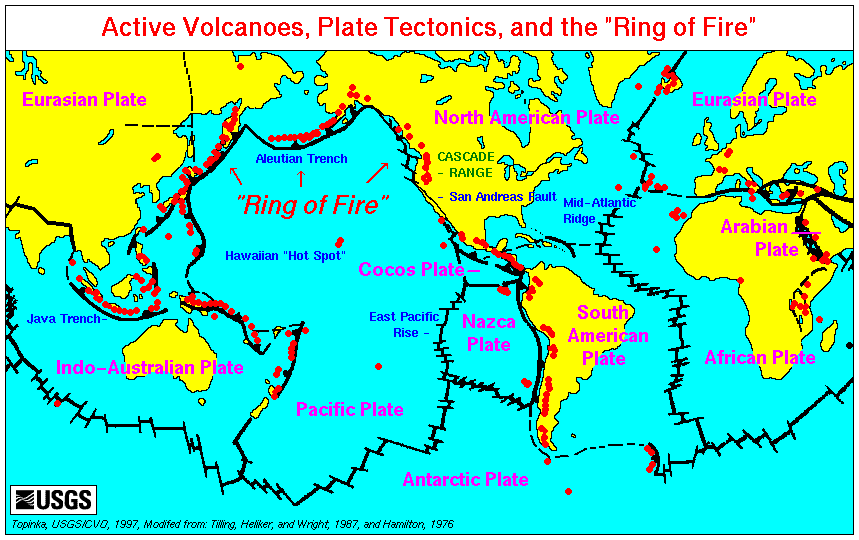
plate tectonics: that earth is form by plates that moves.
mantle: Earth leyer beneath the crust.
subduction: where plates colide, the slidingof a denser oceanplate under another plate.
original horizontaly: the idea that some rocks or mountainsd where form by horizontal lines.
continental drift: the idea that in the past all the continents where together and that are still moving apart 1cm por year.
sea floor spriding: the idea that a new crust is forming under water sea floor.
magma: hot, molten rock below Earth surface.
plate tectonics: that earth is form by plates that moves.
mantle: Earth leyer beneath the crust.
subduction: where plates colide, the slidingof a denser oceanplate under another plate.
Vocabulary#11:Galaxys an Beyond
galaxy: a large group of stars held together by the gravity.
milky way: our home galaxy.
spectrum: a band of colors made when light white light is broken up.
expantion redshift: the shift of a spectrum of a galaxy toward longer (redder)wave lents to do the expansion of space.
big bang: the bigining of the univers, when the densyty of the universe was very haight.
background radietion: electromagnation radiotion left over the bing bang,
quasar: an extrimly bright, extrimly distant,hight energy source.
milky way: our home galaxy.
spectrum: a band of colors made when light white light is broken up.
expantion redshift: the shift of a spectrum of a galaxy toward longer (redder)wave lents to do the expansion of space.
big bang: the bigining of the univers, when the densyty of the universe was very haight.
background radietion: electromagnation radiotion left over the bing bang,
quasar: an extrimly bright, extrimly distant,hight energy source.
Vocabulary#10: Stars
star: a large, hot ball of gases, which is held together by gravity and gives off its own light.
Black hole: an object whoos gravity is so strong that light can not escape it.
parallax: the apparent shift in an object´s location when viewed from two positions.
Light year: the distance light trvels in a year.
constelletion: a number of stars that appear to form a pattern.
magnitude: the brightness of a star.
nebula: a cloud of gases and dust in space.
Black hole: an object whoos gravity is so strong that light can not escape it.
parallax: the apparent shift in an object´s location when viewed from two positions.
Light year: the distance light trvels in a year.
constelletion: a number of stars that appear to form a pattern.
magnitude: the brightness of a star.
nebula: a cloud of gases and dust in space.
super nova: a star that explodes.
Suscribirse a:
Entradas (Atom)